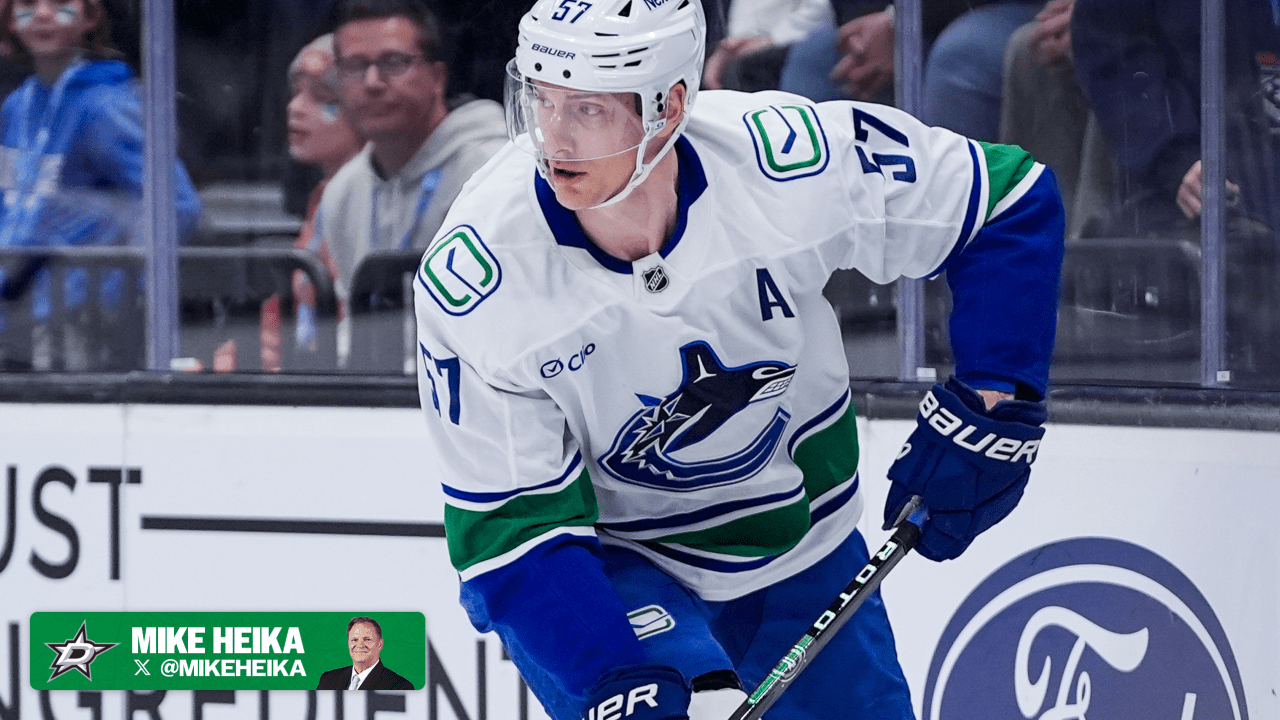
Analyzing the Tyler Myers Trade: Dallas Stars' Economical Blue Line Boost
The NHL trade deadline often ignites a flurry of speculation and high-stakes moves, but occasionally, a strategic acquisition flies under the radar, promising significant impact without the blockbuster price tag. Such is the case with the Dallas Stars' recent acquisition of veteran defenseman
Tyler Myers from the Vancouver Canucks. In a move heralded by many as a textbook example of savvy asset management, General Manager Jim Nill secured a much-needed blue-line reinforcement, laying the groundwork for what could be a deep playoff run. The trade, which saw the Stars part with a 2027 second-round pick and a 2029 fourth-round selection, underscores Dallas's commitment to bolstering its roster with experienced talent while preserving crucial future assets.
A Strategic Imperative: Addressing the Right-Side Defensive Need
For the Dallas Stars, the urgency to upgrade their defensive corps, particularly on the right side, was palpable. Despite having already added formidable pieces like Chris Tanev and Cody Ceci in recent years, a persistent need for a reliable, right-handed defenseman remained. The current depth chart presented a challenging scenario:
*
Nils Lundkvist: While showing flashes of improvement and gaining trust, his performance has been inconsistent, and his smaller frame and up-and-down defensive play have historically made him a liability in the high-pressure environment of the playoffs. His "short leash" in the postseason is a known concern.
*
Depth Players: Beyond Lundkvist, options like Ilya Lyubushkin and Alex Petrovic were considered marginal depth players, ill-suited for top-four minutes, especially against elite playoff competition.
The Stars' predicament wasn't just about finding a player; it was about finding the *right* player at the *right* price. Their previous move for Mikko Rantanen had consumed valuable premium trade chips, leaving them without 2026 or 2028 first-round picks. Furthermore, with injuries to key forwards like Tyler Seguin and the offseason departures of Mikael Granlund, Mason Marchment, and Evgenii Dadonov, Dallas still needed flexibility to pursue one or two top-nine forwards before the deadline. Blowing all remaining assets on a high-cost defenseman was simply not an option.
This complex web of needs and constraints meant GM Jim Nill had to execute a surgical strike – an economical solution that delivered immediate defensive strength without mortgaging the future. This is precisely where the acquisition of
Tyler Myers shines as a masterstroke.
For a detailed breakdown of how this trade addresses the Stars' specific needs, dive into our comprehensive analysis here.
Tyler Myers: A Veteran Presence Poised for a Bounce-Back
At first glance, some might question the acquisition of
Tyler Myers, especially given his challenging season in Vancouver. However, a deeper dive reveals why the Dallas Stars brass is confident in his potential resurgence. Myers, a native Texan from Houston, brings a wealth of experience, now in his 17th NHL season. Jim Nill himself noted, "Tyler is a veteran defenseman that will immediately add to our group. His ability to play on the right side will give us an added element of flexibility on the blue line."
The context of Myers' recent struggles is critical. The Vancouver Canucks, particularly in the period leading up to the trade, were often described as an organization lacking structure and stability. Even a perennial Norris Trophy contender like Quinn Hughes saw his defensive numbers dip under those chaotic conditions. It's a widely held belief among hockey analysts that Myers' difficulties were largely "environmental" rather than a true decline in his abilities. He had been a serviceable second-pair contributor in previous years, fitting comfortably as a No. 4 or No. 5 defenseman on a competitive team.
What exactly does Myers bring to the table for the
Dallas Stars D-core?
*
Imposing Physicality: Standing at a towering 6-foot-8, Myers is a physical specimen. His enormous wingspan and reach make him a formidable presence in the defensive zone, allowing him to break up plays and smother opponents.
*
Above-Average Mobility: Despite his size, Myers possesses surprisingly good skating speed, making him a rangy defender who can cover a lot of ice.
*
Sturdy In-Zone Defender: He excels at the fundamentals of defensive play – winning battles along the boards, stopping cycles down low, blocking shots, and effectively boxing out players in front of the net. He brings a much-needed physical edge.
*
Playoff Acumen: Myers has extensive playoff experience. His physical style, which can sometimes lead to penalties in the regular season, often becomes an asset when the officiating standard changes in the postseason, allowing him to get away with more clutching and grabbing.
While not without his limitations – he can be prone to overaggressiveness and occasional turnovers under heavy forecheck pressure – Myers represents a significant upgrade over the Stars' previous right-side options. In Dallas's more structured system, under a coaching staff renowned for defensive acumen, Myers is expected to thrive. His role could be versatile, potentially stepping into a competent second-pair slot if Lundkvist struggles, or providing rock-solid depth on the third pairing.
Practical Tip: When evaluating a player like Myers, it's crucial for fans and analysts to look beyond raw analytics from a struggling team. Context matters immensely, and a change of scenery to a stable, contending environment often leads to a significant bounce-back in performance.
The Economical Advantage: Jim Nill's Masterclass in Asset Management
The beauty of the
Tyler Myers Dallas Stars trade lies not just in the player acquired but in the incredibly shrewd terms of the deal. By parting with only a 2027 second-round pick and a 2029 fourth-round selection, Jim Nill demonstrated exceptional prudence in asset management.
Consider the landscape:
*
Low Acquisition Cost: For a veteran, right-shot defenseman with Myers' physical attributes and playoff experience, the price of two future mid-to-late round picks is remarkably low. This move avoided the premium cost typically associated with acquiring top-four defensemen at the deadline.
*
Cap Hit Efficiency: While the exact cap hit details are beyond the scope of this context, the emphasis on an "economical" acquisition strongly implies that Myers' contract fits comfortably within the Stars' financial framework, leaving room for further moves.
*
Preserving Future Assets: Crucially, this trade allows the Stars to retain their more immediate and valuable draft picks, which are essential for building for the future or for leveraging in other potential deadline deals. Given their current competitive window, preserving assets for potential top-nine forward acquisitions was paramount.
This strategic approach speaks volumes about Jim Nill's long-term vision. He recognized a crucial need, identified a player who could fill it effectively, and executed a trade that fortified the roster without compromising the team's future flexibility. It's a win-win scenario: Vancouver gains future draft capital for a player who likely needed a change of scenery, and Dallas gets a proven commodity at an incredibly affordable rate.
Anticipating the Impact and Conclusion
The acquisition of
Tyler Myers is more than just another trade for the Dallas Stars; it's a calculated maneuver designed to optimize their blue line for a deep playoff run. By addressing the critical need for a right-handed defenseman with a physical, mobile veteran, the Stars have added significant flexibility, depth, and a crucial safety net for their existing defensive pairings.
Myers' ability to play on the right side immediately eases pressure on young players like Nils Lundkvist, allowing them to develop without being forced into roles they might not yet be ready for in the intense postseason environment. His immense size, mobility, and experience bring an element of ruggedness and defensive reliability that every contender craves.
This trade exemplifies the pragmatic and astute team-building philosophy of the Dallas Stars under Jim Nill. They secured a key piece at an affordable acquisition cost and an economical cap hit, preserving their valuable assets for other potential moves to round out their roster. As the Stars gear up for the stretch run and the playoffs, the presence of
Tyler Myers on their blue line could prove to be one of the most impactful, yet understated, acquisitions of the season, bolstering their Stanley Cup aspirations.