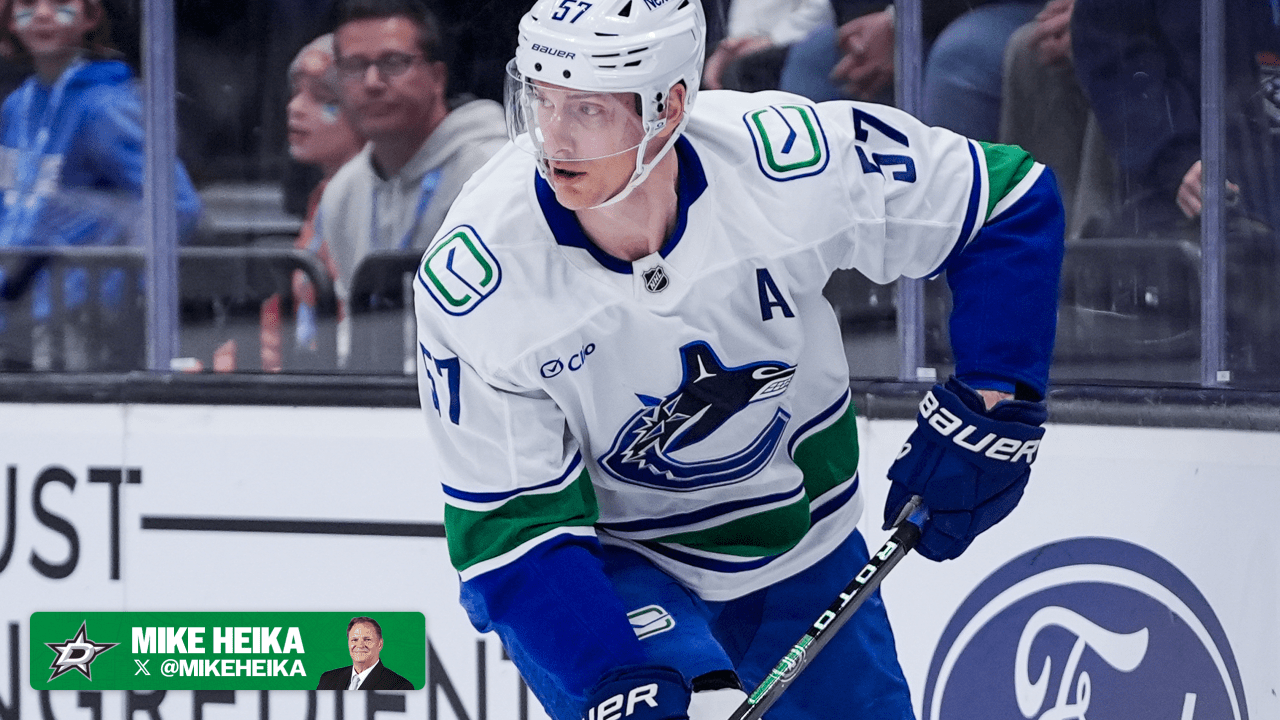
Tyler Myers to Dallas: A Game-Changing Addition to the Stars' D-Core
The Dallas Stars have officially bolstered their blue line, bringing a towering presence and veteran experience to the heart of Texas. In a strategic move ahead of the NHL trade deadline, the Stars acquired defenseman Tyler Myers from the Vancouver Canucks. This isn't just any trade; it's a homecoming for the 6-foot-8 native Houstonian, who returns to his roots to address a critical need for the Stars' defensive corps.
General Manager Jim Nill and the Dallas front office have been clear about their intentions to solidify the team's defensive structure, particularly on the right side. Myers, a seasoned veteran in his 17th NHL season, represents a significant piece in that puzzle, offering immediate flexibility and a physical edge that could prove invaluable as the Stars gear up for a deep playoff run.
A Strategic Acquisition for the Stars' Blue Line
The acquisition of Tyler Myers signals a calculated effort by the Dallas Stars to fortify their roster without depleting their long-term assets. The trade, as reported by Pierre LeBrun of TSN, saw Dallas send a 2027 second-round pick and a 2029 fourth-round selection to Vancouver. This economical approach allowed the Stars to secure a much-needed right-shot defenseman, a position where depth and reliability had become a concern.
"Tyler is a veteran defenseman that will immediately add to our group," Stars GM Jim Nill stated, emphasizing Myers' ability to play on the right side as a key factor in providing "an added element of flexibility on the blue line." This move follows previous attempts to solidify the right side, highlighting a persistent strategic focus for the team. While additions like Chris Tanev and Cody Ceci in previous seasons have helped, the need for a consistent, dependable presence remained.
The urgency to find a right-shot defenseman was underscored by the evolving situation with players like Nils Lundkvist. While Lundkvist has shown flashes of potential, particularly when paired with Thomas Harley, his postseason track record and smaller frame have led to an inconsistent leash in critical moments. Beyond him, the Stars' right-side options for top-four minutes were notably thin, relying on depth players who, while capable, weren't expected to handle heavy workloads against elite opposition. For more details on the context of this acquisition, check out our piece on Stars Acquire Tyler Myers: Addressing the Right-Side Defense Need.
Unpacking Myers' Game: Size, Mobility, and Experience
Tyler Myers brings a unique blend of attributes to the Dallas Stars. His most striking feature is undoubtedly his imposing 6-foot-8 frame, which, combined with an enormous wingspan, makes him a formidable presence in his own zone. Yet, what truly sets Myers apart for a player of his stature is his above-average skating speed. This combination of size and mobility allows him to be a surprisingly rangy defender, capable of covering a lot of ice and disrupting plays.
On the defensive end, Myers is known for being a sturdy in-zone defender. He excels at winning battles along the boards, effectively stopping cycles down low, and using his reach and physicality to box players out in front of the net. He's also a willing shot-blocker, embodying the gritty, playoff-style hockey the Stars aim to play. His physical edge will be a welcome addition, particularly as the intensity ramps up towards the postseason.
It's important to acknowledge that Myers had a challenging year in Vancouver, with some underlying numbers reflecting those struggles. However, much of this can be attributed to the Canucks' tumultuous period, which often lacked structural stability. In a more organized and disciplined system like Dallas', Myers is widely expected to rebound. He's been a serviceable second-pair contributor in previous seasons, closer to a reliable No. 4 or No. 5 defenseman on a competitive team. The Stars' coaching staff and established defensive structure are well-positioned to help Myers rediscover his consistent form, leveraging his strengths while mitigating his known weaknesses.
While Myers is prone to being overaggressive and taking penalties at times, this aspect of his game often shifts in the playoffs. As whistles tend to diminish, his ability to engage in more clutching and grabbing can actually benefit his defensive effectiveness, allowing him to use his size more freely. For an in-depth look at the economic factors and strategic implications of this trade, read our analysis: Analyzing the Tyler Myers Trade: Dallas Stars' Economical Blue Line Boost.
Where Myers Fits: Blue Line Flexibility and Playoff Readiness
The arrival of Tyler Myers provides the Stars with crucial flexibility and a much-needed safety net on their right side. Given the aforementioned inconsistencies from Nils Lundkvist, particularly under playoff pressure, Myers presents a competent alternative or complement. He could potentially slot into the second pair alongside a puck-moving defenseman like Thomas Harley, providing a stable, physical counterpoint.
Potential Deployment Scenarios for Tyler Myers:
- Second Pair Stability: Pairing Myers with an offensive-minded defenseman like Thomas Harley could create a balanced duo. Myers' defensive solidity and reach would allow Harley more freedom to jump into the rush.
- Third Pair Anchoring: If Lundkvist finds his rhythm, Myers could provide an incredibly strong anchor for the third defensive pair, offering veteran leadership and a formidable physical presence against opposing depth lines.
- Penalty Kill: His long reach and shot-blocking ability make him a strong candidate for the penalty kill, an area where the Stars always seek improvement.
One area Myers has occasionally struggled with is decision-making during zone exits, especially under heavy forecheck pressure. He can be prone to turnovers if forced to make a high volume of complex breakouts. The Stars' coaching staff will likely emphasize simplified breakouts and utilize his mobility to carry the puck out of danger when possible, rather than forcing intricate passes. Pairing him with a strong puck-mover who can initiate breakouts efficiently will be key to maximizing his effectiveness.
Beyond specific pairings, Myers' veteran experience—now in his 17th NHL season—is invaluable for a team with Stanley Cup aspirations. He understands the grind of a long season and the heightened intensity of the playoffs. This seasoned perspective, combined with his physical attributes, makes him an ideal addition for a team looking to contend.
The Economic Aspect: Value for Assets
One of the most impressive aspects of the Tyler Myers acquisition is the economical nature of the deal. For the cost of a future second-round and fourth-round pick, the Stars secured a significant upgrade on their blue line. This was a critical consideration for Dallas, as the team had previously expended a good portion of its premium trade chips through other major acquisitions, reflected in their lack of a 2026 or 2028 first-round pick.
Furthermore, with ongoing needs to potentially add one or two top-nine forwards due to injuries (like Tyler Seguin's) and offseason departures, the Stars couldn't afford to blow all their remaining assets on a high-priced, big-name top-four defenseman. Myers represents a "significant upgrade over what the Stars were icing on the right side" without sacrificing the flexibility to make further moves, making it a shrewd piece of business by Jim Nill.
Conclusion
The acquisition of Tyler Myers is a clear statement of intent from the Dallas Stars. By adding a 6-foot-8, mobile, and experienced right-shot defenseman, the Stars have addressed a critical need on their blue line with an economical trade. Myers brings a potent combination of physical presence, defensive reliability, and veteran poise that will be essential for navigating the challenges of a deep playoff run. While his recent numbers in Vancouver might have been rough, his potential for a rebound in a structured Dallas system is high, promising a significant boost to the Stars' D-core. As the "Big Texan" returns home, he's poised to play a crucial role in Dallas' quest for the Stanley Cup, offering both immediate impact and invaluable flexibility.